
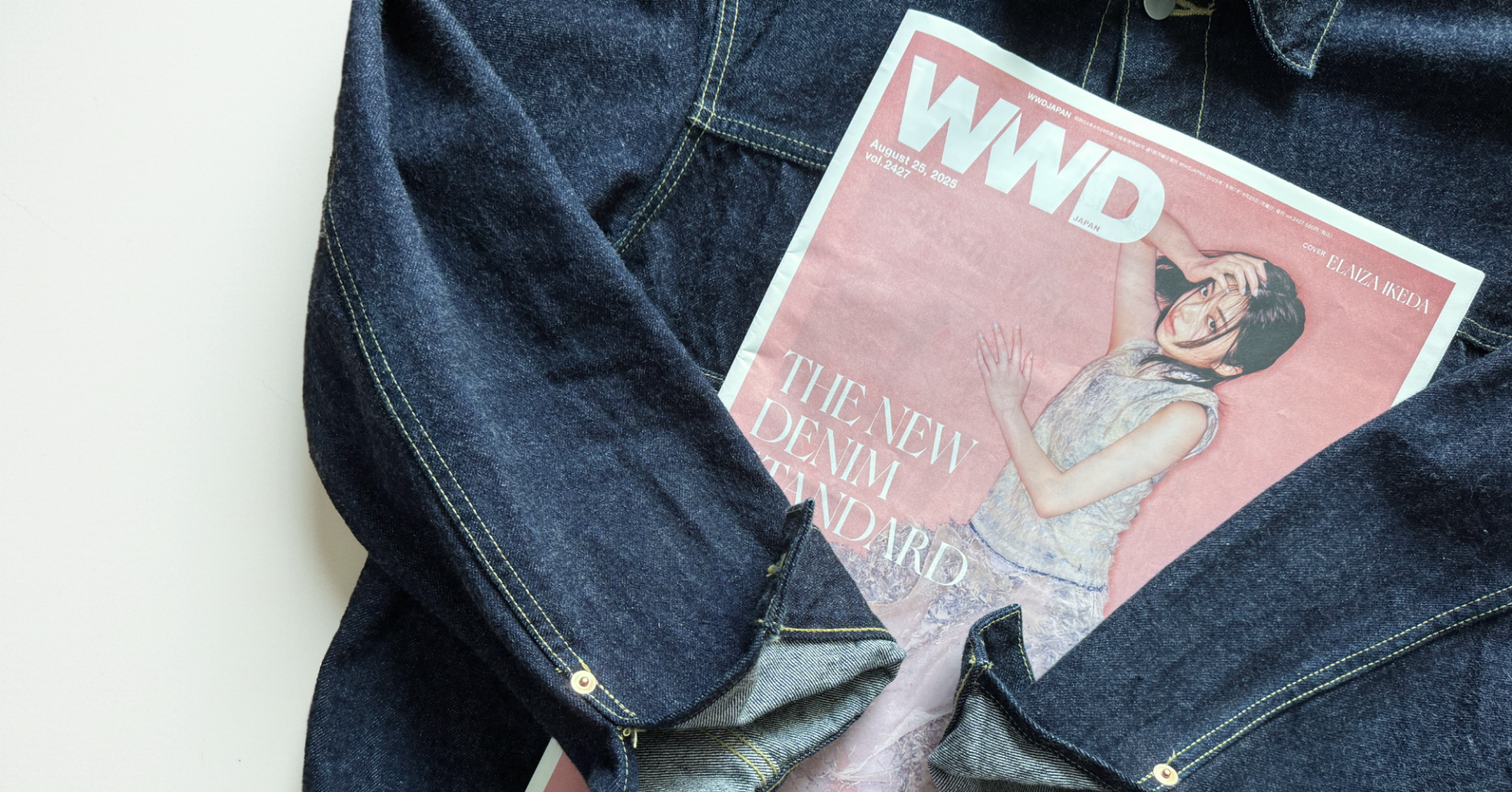
WWD特集から見るデニムの「今」
・デニムの最新トレンドを探る|WWDJAPAN Vol.2427(特集号)
https://amzn.to/4lSFxKo
WWDの特集を眺めていると、どうやらデニム業界がいよいよ流行として元気を取り戻している模様。トレンドはワイド、バギー、そして目新しいバレルレッグ・シルエット。
デニム素材そのものにも新たな感性や新しい価値が流れ込んでいるのだとか。加工もさらに進化し、素材そのものからデザインされる存在に。そんなデニムの今の熱量は、デニムフリークとしてもやっぱりうれしいものです。
ただ、これまでの経験上分かってることも──そう、熱はいつか引く。だからこそ、作り手として旬な状態(Hype=流行の熱)を、これからも永く続く愉しみ(Culture=日常の習慣)にするために、このチャンスをどう活かしていくか?流行は点、文化は線──今日はそんな話。
デニム業界に見る二つのループ
日本のデニム市場を振り返ってみると、このHypeとCultureは常に平行線。流行という入口をきっかけに文化の深度が進んでいる感じでもなく、二つのループが交わる期間そのものが少なく、これが文化に根付く障壁になっているのかも?
- Hype ループ:
シルエットや素材をきっかけに流行し、商品が一気に流通。消費が進み、やがて飽きられ自然消滅。中心はトレンドに敏感なファッションブランド。いかに波に乗り、価値を高め売り切るか。いわばアパレル的発想。 - Culture ループ:
ストーリーやプロセス、着る時間を分かち合う静かなコアファン。細く長く続くこの中心を担うのは老舗ブランドやこだわりのリプロダクトメーカー。定番を積み重ねる誠実さが強みの一方、硬派すぎて伝わりにくい一面も。
▶︎次に見ていくのは、なぜ二つが交わりにくかったか?という分析です。
文化にできない構造的理由
デニム発祥の地アメリカに比べ、ジーンズ所有率が低いと指摘されることがある日本。何本も買っちゃうデニム狂からすると意外ですが(!)もしそうだとすれば、これまでHypeループのユーザーは、デニムが日常欠かせない存在となる前に、情報として消費してしまっているということ。どうして世界にも名だたる質の高いデニムが作り続けられるこの日本で、日常的な文化にできていないんでしょう。
背景にはデニム市場が所属する、アパレル業界のブランドと縫製の二重構造があります。トレンド設計はブランド。その要求に応えるのが縫製。縫製会社にとっての顧客はエンドユーザーではなくブランドなので、流行の上下にどうしても翻弄され疲弊してしまう。
ただ風向きは変わりつつあります。個人縫製工房やファクトリーブランドの台頭で、平行線だった二つのループが、いよいよ交わる可能性が生まれています。WWDの特集には、そのためのヒントがたくさん散りばめられていました。
▶︎ここから流行を文化へ翻訳するための骨子を、歴史から探っていきます。
流行から文化に変換する為に
ではHypeとCulture二つのカードを持つ作り手が、どのように撚ると、永く続く一本の糸=文化として定着できるのか。面白いことに、ここに必要な視点が、本場アメリカが体験してきたジーンズの歴史から学ぶことができます。
・前編/なぜデニムはファッションになったのか?|LEON
https://www.leon.jp/fashions/6457
・後編/なぜ世界一愛される存在になったのか? |LEON
https://www.leon.jp/fashions/6464
LEONの素晴らしいまとめを参照に時代別で整理すると、道具としてのタフさを磨いた30’s。戦中の制約でデザインが削ぎ落とされた40’s。反逆と若者の象徴になった50’s、ドレスコードの突破口となった60’s。自己表現のキャンバスになった70’s──ここから見えてくるポイントは3つ。
- Identity
流行ポイント(シルエットや色、ステッチ)を静かな主張で翻訳。身につけカスタムできる事で、内面の自分を表現できる、なくてはならないパートナーとして選んでもらえるブランド設計 - Comfortable
心身ともにリラックスできる、身体性と扱いやすさ。デニム素材の持つ経年変化をデザインとして言語化し、自分らしさを感じられる時間や機会まで組み込んだ製品設計 - Essential
手に入れた自分らしさをいつでも更新でき、いつまでも着られる長い商品寿命。安心と信頼づくりのリペアだけでなく、2次流通先のオーナーまでをも見据えた体験設計
この1→2→3の順序こそが、文化へと成熟させるプロセス。まさに温故知新。この流れを商品の追体験としてデニム業界全体で「価値共創」をどう落とし込んでいくか。業界全体がアイデアを出しアクションを共有していけば、デニム素材そのもののブランドやファン拡大をキャッチできる「文化」の礎になる。つまり、周り回って中長期的に、安定収益構造の保証につながっていくはず。
だからこそ、分かち合う場作りを
この時代、Webが販売拡大ツールだけではもったい無い。ブランドを超え、デニム業界とユーザーがゆるくつながる場所があれば、デニムを文化にしていけるスピードは上がるはず。変化の早いVUCA時代だからこそ、選択と集中に追われるメーカーの外側に、時間を分かち合うハブがあると心強い。その文化の礎、きっかけを担うハブとして、fade ink.が貢献できればと考えています。
作り手の皆さん、ぜひご意見を!
今回の仮説は、私なりの流行を文化にしていく戦略で考えてみましたが、いかがでしたでしょうか?あくまでもいちユーザー視点であり、作り手の現場ではまた違うご意見があると思います!ぜひご意見お聞かせください!
<English Ver.>
Trend is a point, culture is a line — moving denim’s revival from Hype to Culture. What directions might makers want to keep in mind?
Denim “now,” seen through WWD
Exploring the latest trends in denim | WWDJAPAN Vol. 2427 (Special Issue)
https://amzn.to/4lSFxKo
Looking through the WWD feature, it’s clear the denim scene in Japan is lively again. The key looks: wide, baggy, and the fresh-sounding barrel-leg silhouette.
We’re also hearing that new sensibilities and values are flowing into denim as a material. Finishes are evolving; some pieces feel “designed from the fabric up.” As a denim fan, this current heat is simply exciting.
And yet, experience tells us something: heat fades. Which is why, from a maker’s point of view, the real question is how to turn today’s hype (Hype = the heat of the trend) into a joy that lasts (Culture = an everyday habit). If “trend is a point and culture is a line,” how do we make that line longer? That’s today’s topic.
Two loops at work in the denim market
Looking back at Japan’s denim market, Hype and Culture have often run on parallel tracks. The entry created by a hot trend doesn’t always deepen into culture. The overlap window is small—and that may be one reason “denim as culture” struggles to take root.
Hype loop:
A silhouette or fabric sets off a trend → product floods the market → consumption spikes → interest cools. Trend-sensitive brands lead here—riding the wave, refreshing perceived value, and selling through. Call it the apparel mindset.
Culture loop:
Quiet core fans share stories, process, and the time they spend wearing their jeans. It runs thin but long. Heritage and repro makers often anchor this side—steady standards built with care—yet the appeal can feel a bit too “hardcore” for broader audiences.
Next up: why do these loops intersect so rarely?
Why it’s hard to turn “trend” into “culture”
Compared with denim’s birthplace, the U.S., it’s sometimes pointed out that jeans ownership in Japan is relatively low. As someone who buys multiple pairs, that’s surprising—but if true, maybe many Hype-side users end up consuming denim as information before it becomes an everyday companion.
Why hasn’t denim—despite Japan’s world-class quality—become a daily culture here?
One backdrop is the industry’s two-tier structure: brands design trends; sewing/production executes them. For sewing companies, the client is the brand, not the end user—so they’re inevitably buffeted by trend upswings and retreats.
The wind, however, is shifting. Independent ateliers and factory brands have gained traction, softening the boundary between the two loops. The WWD feature is full of hints for making them meet.
From here, we’ll look to history for a simple framework to “translate” trend into culture.
From trend to culture: three lenses from denim’s American story
If makers today hold both cards—Hype and Culture—how do you twist them into one long thread that lasts? Helpfully, the American journey of jeans offers a way to think about it.
• 1930s: toughness as a tool was honed.
• 1940s: wartime constraints pared back design.
• 1950s: jeans became a symbol of youth and rebellion.
• 1960s: a gentle break with dress codes.
• 1970s: denim as a canvas for self-expression.
From that arc, three points stand out:
1) Identity
Translate trend cues (silhouette, color, stitching) into a quiet statement. Leave room for customization so people can express who they are. Aim to be the indispensable partner they choose again and again.
2) Comfortable
Make both body feel and care easy. Put words to the design of aging and patina, and build in the time and occasions that help wearers feel “this is me.”
3) Essential
Let people update their “self-fit” anytime, with products that live long. Beyond repair, design the experience so even the second owner is imagined from the start.
That 1 → 2 → 3 sequence is a simple path from trend to culture—old wisdom, newly applied. If the industry can turn this sequence into a shared value-creation story—ideas in, actions shared—we can build a foundation where “denim itself” grows as a brand and a fandom. In turn, that should support more stable, mid- to long-term economics.
Which is why “places to share” matter
In this era, it’s a waste if the web is only a sales amplifier. If there’s a place—across brands—where the industry and wearers connect loosely, the shift from trend to culture will move faster. In a VUCA world, where makers must keep choosing and focusing, it helps to have a hub outside the brand where time and experience are shared.
If possible, fade ink. would like to contribute as that small hub.
To makers — we’d love your thoughts
This is one way—from a user’s point of view—to think about turning hype into culture. On the ground, your view may be different, and that’s valuable.
I’d appreciate your thoughts on this hypothesis—agree, disagree, or in between. Comment or DM!